A brief history of deuterium‑depleted water
From the first minute after the Big Bang to a rectification column in the Russian countryside: how a hidden isotope of hydrogen was found, feared, depleted, and finally understood.
It began sixty seconds after the Big Bang
Deuterium is as old as the universe. About six drops of it are in every liter of water you have ever drunk.
In the primordial plasma that became our universe, the first element appeared: hydrogen, one proton and one electron, at a billion degrees. Protons and neutrons paired into deuterons, and almost all of them fused onward into helium. Primordial matter split unequally, roughly three quarters hydrogen and one quarter helium.
The process was not thorough. As the universe cooled, a small share of deuterium nuclei stayed as they were: unpaired, isolated, stranded between hydrogen and helium. Most hydrogen went on to fuel the stars. The deuterium that survived the stellar furnaces eventually bonded two-to-one with oxygen and became water, the seawater and freshwater of Earth.
There are about six drops, some 300 milligrams, of deuterium in every liter of water on the planet. It has been in every glass anyone has ever drunk, and for all but the last ninety years nobody knew it was there. The ocean standard (VSMOW) is 155.76 PPM.
From a second hydrogen to 5 PPM
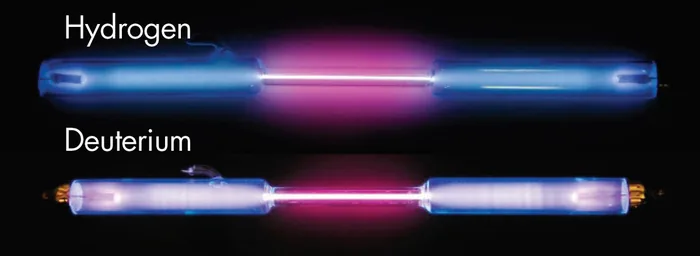
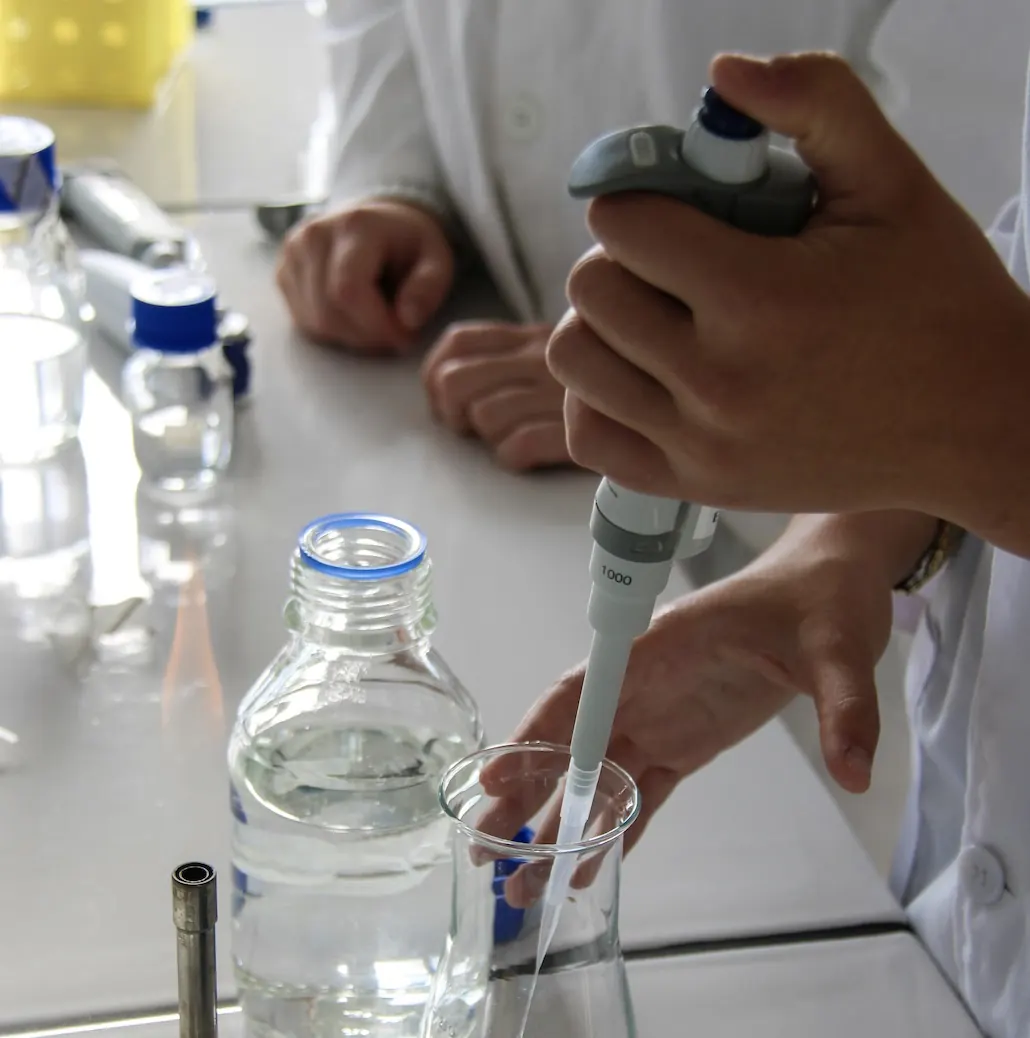

One proton. One neutron. Twice the weight.
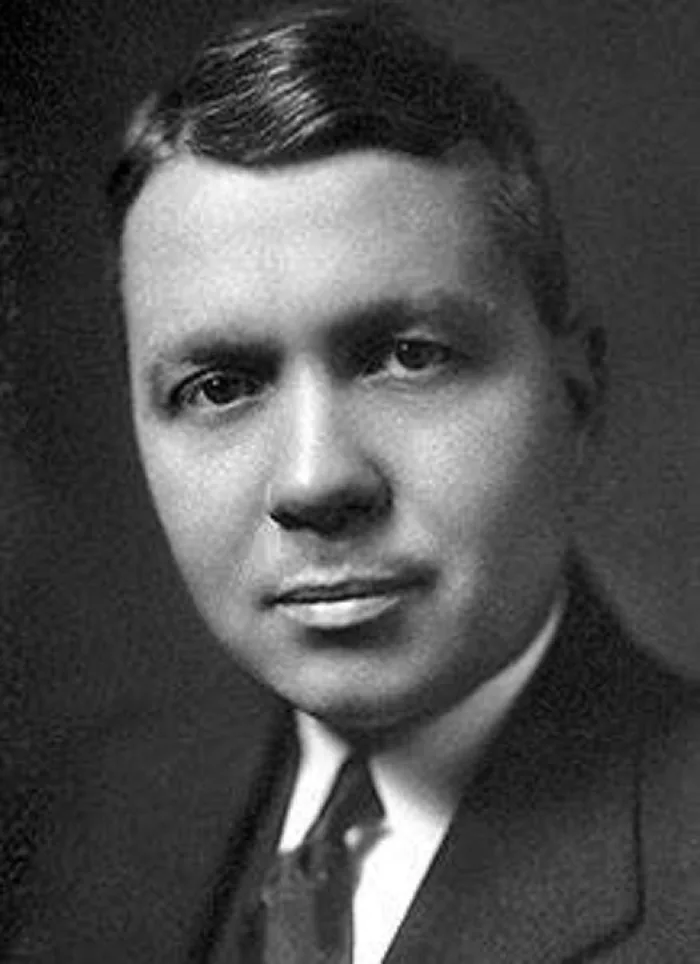
Harold Urey proves there is a second hydrogen
In 1932 Harold Urey discovered a second, heavier hydrogen. He named it deuterium, and won the Nobel Prize.
Physicists had suspected a second isotope of hydrogen since 1913: the atomic weight and the mass-spectrographic value of hydrogen simply refused to agree. At Columbia University, Harold C. Urey worked with Ferdinand G. Brickwedde at the Cryogenic Laboratory of the National Bureau of Standards and George R. Murphy, and in 1932 they proved it: a heavier hydrogen carrying an extra neutron, double the weight, mass 2.
It had gone unnoticed because it is scarce, about 0.0149% of all hydrogen, one heavy water molecule for every 3,300 ordinary ones in seawater. Naming it took longer than finding it: barogen, haplogen, diplogen, deutium and dygen were all proposed before they settled on deuterium, from the Greek deúteros, second. Ordinary single-proton hydrogen, 99.98% of it all, they named protium.
Urey took the 1934 Nobel Prize in Chemistry. Concentrated deuterium, heavy water, turned out to be the missing piece for nuclear reactors and for the bomb. The discovery ushered in the atomic age.

Same taste, same look, different physics
Three waters that look and taste the same. The difference is one neutron.
H₂O
18 mass unitsLight water. 99.957% of the water molecules around you.
HDO
19 mass unitsSemi-heavy water. One in every 3,300 molecules carries a deuteron.
D₂O
20 mass unitsHeavy water. Twice the isotopic mass; no other element differs so much between its isotopes.

Tritium, the third and radioactive isotope with two neutrons, appears once in roughly 41 million hydrogen atoms: effectively absent.
Heavy water meets living things
The first biologists found heavy water slowed living things down. Even its ice sinks instead of floating.
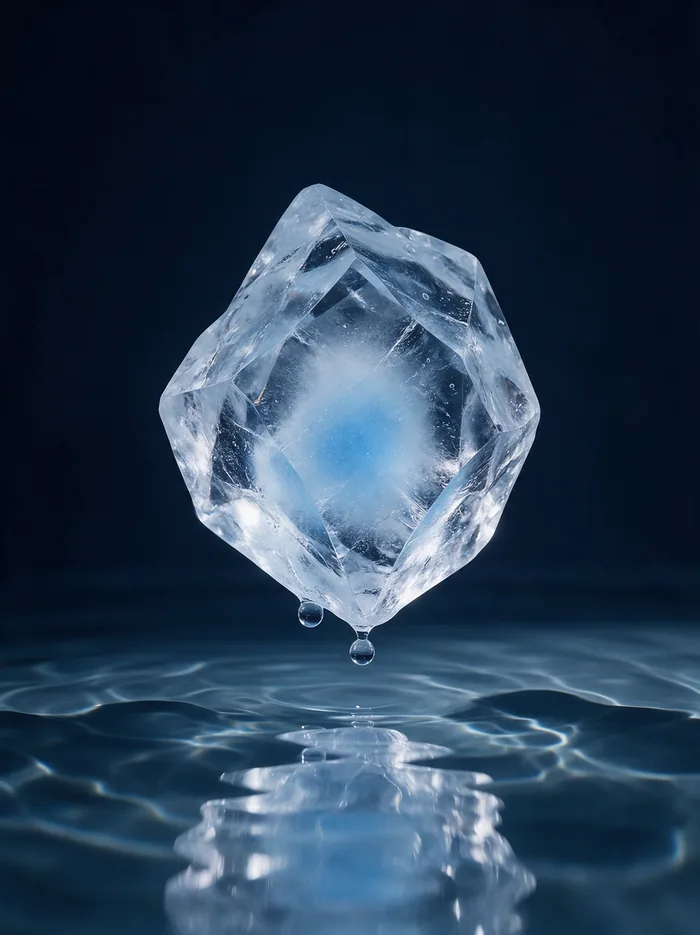
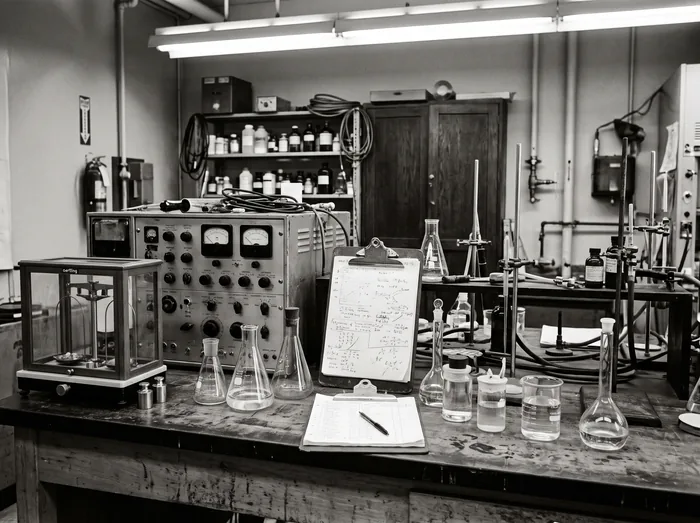
Urey's mentor Gilbert N. Lewis, at Berkeley, was the first to make pure heavy water by electrolysis, in 1933. He noticed that its ice sinks instead of floating, and that it strongly delayed the reproduction of microbes and held back germinating seeds. At Yale's Osborn Zoological Lab, Oscar W. Richards showed that yeast splits sugar nine times more slowly in heavy water. What looked and felt like ordinary water behaved like something else entirely.
From 1934 to 1939, H. G. Barbour and colleagues in Yale's pharmacology department ran the first systematic studies of heavy water in mice. Across 216 English-language studies published between 1933 and 1939, the observation was consistent: heavy water impaired life. Replacing normal water with just 30% heavy water killed bacteria, plants and animals within days. ATP itself had been discovered in 1929; the Krebs cycle followed in 1937.
Then the war took the supply. Heavy water became a strategic military material, and biological research on deuterium thinned out and faded until the 1950s.
What looked like water behaved like something else entirely.
A longevity anomaly in the glacial melt
Parts of Siberia had 324 centenarians per million people. What they shared was glacial melt water, naturally lower in deuterium.
The year Watson and Crick published the double helix, a graduate student in gerontology and genetics at the University of Tomsk, Gennady D. Berdyshev, was pushed by the biophysicist Boris N. Rodimov to look at a Soviet statistical oddity. Nationally there were fewer than 10 centenarians per million people. In parts of Siberia there were 324 per million, and the populations of Altai and Yakutia stayed vigorous into old age. What those regions shared was pristine glacial-melt water from high altitude.
The first experiments mined permafrost twenty meters down and melted ice that had lain frozen for 300 million years. In the lab, that water stimulated cell division and slowed markers of aging. When funding for ancient ice ran out, local Siberian snow produced a similar effect. The idea of deuterium-depleted water was taking shape.
V. M. Muhachev's work at Tomsk in 1959–60 convinced colleagues that even small amounts of deuterium distorted hydrogen bonding and inhibited sub-molecular processes. By 1960 Berdyshev could link Yakut and Altaian longevity to melt water; measurement showed ancient ice, high-altitude snow and glacial runoff to be 15–20% depleted in deuterium relative to what became the Vienna Standard Mean Ocean Water figure. The findings first appeared in an agricultural journal in Omsk in 1961.
In 1966 Rodimov and his department chair I. V. Toroptsev were permitted to publish in English. Biological Role of Heavy Water in Living Organisms made them the first to show that water depleted in deuterium had a positive biological effect, thirty years after the isotope was found at all.

When the Hunza of northern Pakistan were studied for their longevity, the water from the glaciers of Mt. Ultar measured about 133 PPM of deuterium, a 16% deviation from the 155 PPM global standard.
America takes up the trail
At Argonne, adding deuterium proved harmful to mice. Depleting it by 30% was associated with longer lifespans.
In 1963, John F. Thomson of the medical research division at Argonne National Laboratory wrote the definitive 152-page treatise Biological Effects of Deuterium. His colleagues Joseph J. Katz and Henry L. Crespi noted in 1966 that deuterium affects the shape of proteins and the replication of DNA. Two mouse experiments framed the whole field: raising body water to 30% heavy water was fatal within days; depleting body-water deuterium by 30%, to about 105 PPM, was associated with significantly longer lifespans.
In 1974, at the 2nd International Conference on Stable Isotopes, the British scientist T. R. Griffiths proposed that deuterium might be a primary driver of aging. More electronegative than protium, twice as heavy, differently bound, it interferes with DNA replication: when a repair enzyme carries a deuteron where a proton belongs, an error reaction becomes possible. A year later Gleason and Friedman published in Nature the first American study using deuterium-depleted water to increase grain growth.
The clinical decade
In the 1990s, researchers in Romania and Hungary took deuterium depletion into clinical study.
At the Romanian University of Medicine and Pharmacology, W. Bild and colleagues found that mice given a sub-lethal 8.5-gray radiation dose fared better on deuterium-depleted water: 61% survival at 30 PPM against 25% for tap-water controls, with blood counts holding steady. Infected with pneumonia, the same depleted group showed immune responses the controls did not. The researchers proposed less error-prone cell division and more effective repair of radiation-damaged DNA, work carried out to evaluate depletion for patients undergoing chemotherapy.
That work, alongside Albert Szent-Györgyi's legacy, drew in Gábor Somlyai, a doctor and molecular biologist who ran the most extensive clinical program on depletion to date, published in 1998 as The Biological Effects of Deuterium Depletion and in his 2001 book Defeating Cancer. His double-blind trials reported no side effects and better outcomes in the test group than in controls, positioning depleted water as a complementary adjuvant to conventional care. Between October 1992 and spring 1999 his team administered some 350 tons of depleted water to roughly 1,200 patients, generating over 12,000 pages of records; by 2019 the archive held 2,222 case studies.
Animal survival after sub-lethal irradiation, Bild et al. Reported research findings; not a claim about any product.
The jam inside the nano-motor
In 2007 Abdullah Olgun proposed that deuterium jams the motor that makes the cell's energy:
ATP synthase.
In the 1960s Paul D. Boyer at UCLA had found the protein assembly at the end of the electron transport chain that carries the final burden of making ATP: a true mechanical motor with rotor, stator and magnetic field, spinning near 9,000 RPM. He named it ATP synthase, and shared the 1997 Nobel Prize with John E. Walker and Jens C. Skou.
It took another forty years to connect it to deuterium. In 2007 Abdullah Olgun, at the Gülhane School of Medicine in Ankara, published Biological Effects of Deuteronation: ATP Synthase as an Example, followed by Deuteronation and Aging. His proposal: roughly every fifteen seconds a bare deuteron, for which no receptor is open, strikes the spinning motor, making it stutter, jam, and degrade. Researchers propose this as one of the primary mechanisms of aging.
A year earlier Igor A. Pomytkin and O. E. Kolesova had located the effect inside the mitochondria, showing heavy water inhibited the hydrogen-peroxide signaling that regulates oxidative stress. The two lines of work met at the same conclusion.
Every fifteen seconds, a deuteron strikes the motor.
From freeze-and-thaw to the rectification column
Freezing water at home removed about 5%. A vacuum rectification column removes 97%.
After the Soviet Union fell, Berdyshev, by then chair of genetics at Taras Shevchenko National University in Kiev, built three industrial machines that recreated glacial melt water, cutting deuterium by 30–40% to 90–105 PPM by exploiting the fact that heavy water freezes at a slightly higher temperature. A home version, the "melt water cure," spread widely through the 1990s: repeated freeze-thaw cycles in a household freezer, discarding what froze first. It was popular, and only marginally effective, a claimed 5% reduction, not enough to matter.
The step change came from Dr. Igor Selivanenko at the Institute of Fine Chemical Technologies in Moscow, who built the first vacuum rectification column dedicated to producing light water, borrowing decades of heavy-water separation practice and inverting the goal. It could remove 97% or more of the heavy water. In 2008 Anton Chernopiatko, a businessman and scientist who had co-authored depletion research with Pomytkin and Oxford colleagues, acquired the intellectual property, spent years improving it with his technologist Alexander Emalianov, and in 2012 began building a plant in the Russian countryside. It became the first dedicated facility in the world producing 90%+ DDW continuously.
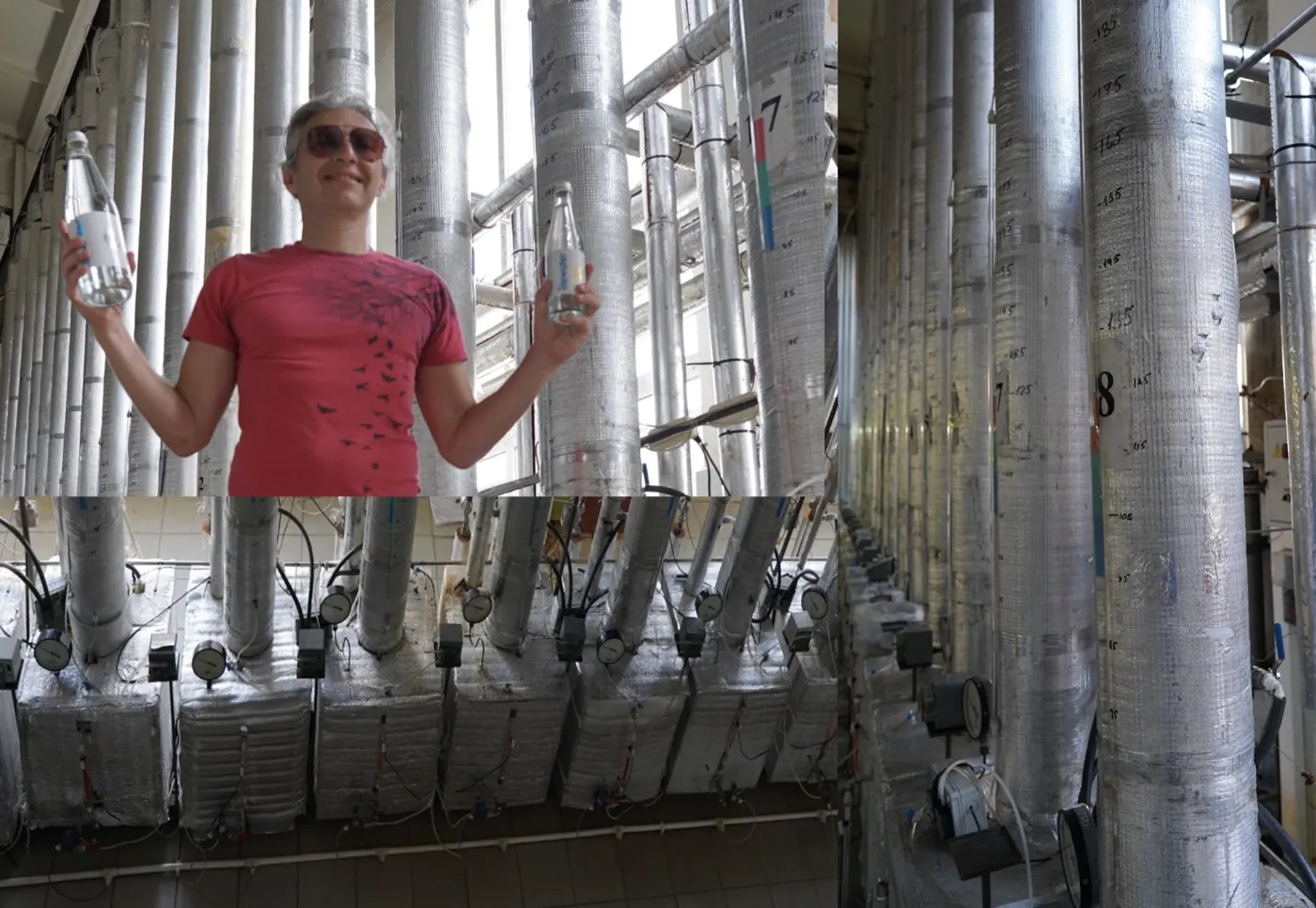
Every liter separated by isotope, then measured before it ships.
Ninety years of moving one number down
Ninety years of science, one number moving down: from 155.76 PPM to 5.
Bars show deuterium concentration relative to the ocean standard. Depletion is a mechanism under study; the water is simply how you reach a lower level.
Ninety years in, still early
Today depleted water is made at scale, tested batch by batch, and reaches the United States as Litewater.
The mechanisms of deuterium and the means of removing it are now reasonably well understood, and awareness of it is still in its infancy. Four international conferences on deuterium depletion in Budapest have given researchers a place to present. Laszlo Boros, MD, professor at the University of California, co-founded the Center for Deuterium Depletion in Los Angeles, where testing and protocols were first offered to the public.
There are four primary producers of deuterium-depleted water: Vividi in Russia, Qlarivia in Romania, Preventa in Hungary, and two plants in China. Vividi's production reaches the United States as litewater, with 94–97% of the deuterium removed.
Supply is the catch. Extracting six drops of heavy water from a liter is a complex multi-stage industrial process requiring specialized distillation and rectification equipment at scale. As demand grows, more plants will come online and the technology will get more efficient. In the ninety years since hydrogen's second isotope was found, the world has changed as at no other time in human history, and thanks to the pioneers above, radical life extension has a powerful new ally.
Deupletion.ai · our deuterium research assistant Read more on the studies, and ask your own question. Ask the assistant →
Cofounder, Litewater Scientific
© July 2019
From 155.76 PPM to 5.
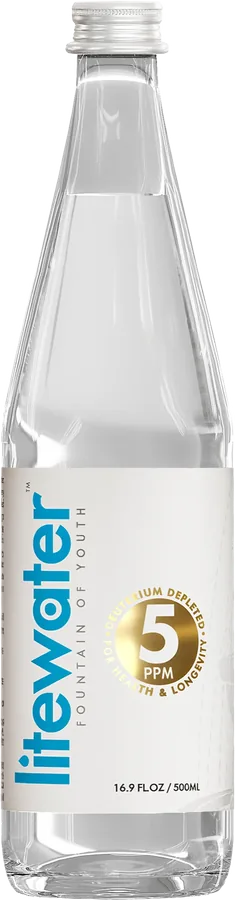 More than 94% deuterium free
The lightest water you can drink
Ordinary water carries about 150 PPM of deuterium. Litewater is depleted to as low as 5 PPM, the state this history was written about.
